





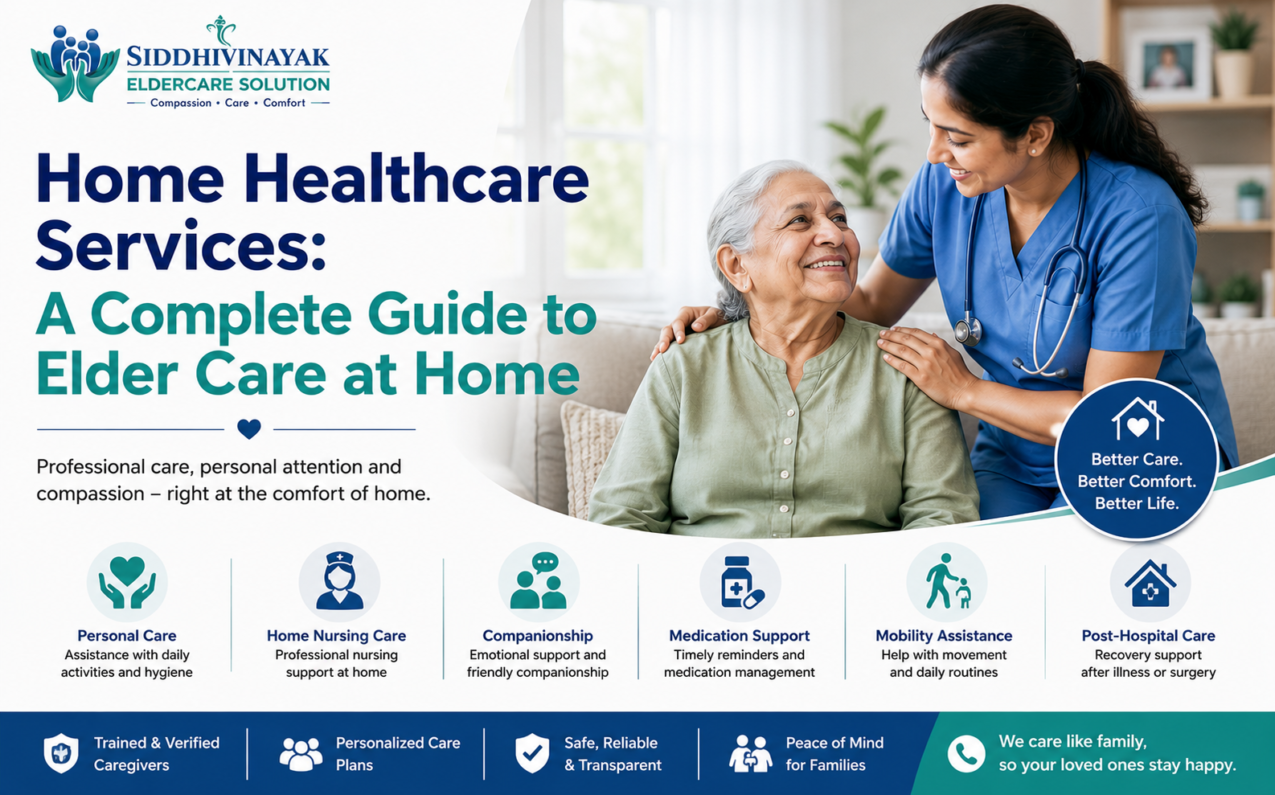
Growing older is a natural part of life, but ageing can sometimes make everyday activities more difficult. Seniors may need assistance with mobility, personal care, medication routines, meals, companionship, or recovery after an illness or hospitalisation.
For families, providing this support while managing work and other responsibilities can be challenging. This is why home healthcare services and professional elder care at home have become an important option for families who want their loved ones to receive care in a familiar and comfortable environment.
With the right support, seniors can continue living safely at home while maintaining their independence, dignity, and quality of life.
What Are Home Healthcare Services?
Home healthcare services provide professional or supportive care to individuals in their own homes. Depending on a person’s needs, services can range from daily assistance and companionship to nursing support and post-hospitalisation care.
For elderly individuals, home care for seniors can be particularly valuable because it allows them to receive personalised assistance without completely changing their familiar routine.
Home healthcare may include:
- Personal care assistance
- Elderly care at home
- Home nursing care
- Medication reminders and support
- Mobility assistance
- Meal and daily activity assistance
- Companionship for seniors
- Post-hospitalisation care
- Recovery and rehabilitation support
- Assistance for families managing elderly care
The exact services required should depend on the senior’s individual needs and, where applicable, the advice of qualified healthcare professionals.
Why Choose Elder Care at Home?
One of the biggest advantages of elder care at home is familiarity.
Many seniors feel more comfortable in their own homes, surrounded by familiar rooms, belongings, neighbours, and routines. Moving to a completely different environment can sometimes be stressful.
With professional senior care services, families can arrange support around the individual’s lifestyle and requirements.
- Comfort and Familiarity
Home is often where seniors feel most comfortable. Receiving assistance at home can allow them to maintain familiar routines while getting the support they need.
- Personalised Attention
Every elderly person has different requirements. Some may need help with daily activities, while others may require companionship or more specialised support.
A personalised elderly home care plan can focus on the individual’s needs rather than providing a one-size-fits-all approach.
- Support for Family Caregivers
Family members often want to care for their parents or grandparents themselves but may not always be available throughout the day.
Professional in-home care for seniors can provide additional support, allowing families to balance their responsibilities while remaining involved in their loved one’s care.
- Maintaining Independence
The objective of senior care should not always be to do everything for an elderly person. Appropriate assistance can instead help seniors remain involved in their daily routines and maintain as much independence as safely possible.
What Services Can Seniors Receive at Home?
The type of care required depends on the person’s health, lifestyle, and level of independence.
Personal Care Assistance
Some seniors may need help with everyday personal activities such as bathing, dressing, grooming, or moving safely around the home.
Professional caregivers can provide appropriate assistance while maintaining privacy and dignity.
Companion Care
Physical care is only one part of healthy ageing. Social connection and companionship can also contribute to emotional wellbeing.
Companion care for seniors can involve conversation, reading, hobbies, walks where appropriate, or simply having someone available for regular interaction.
Post-Hospitalisation Care
Returning home after hospitalisation can be an important transition. Seniors may temporarily require additional assistance with mobility, daily activities, medication routines, or recovery.
Post-hospitalisation home care can help families organise appropriate support during this period.
Assistance With Daily Activities
Some seniors may need support with household routines, meals, shopping, mobility, or other everyday activities.
The objective is to provide assistance while respecting the senior’s preferences and independence.
Who Can Benefit From Home Care for Elderly Parents?
Home care for elderly parents may be useful for families in several situations.
For example, professional support may be considered when:
- Parents are living alone.
- Mobility has become difficult.
- Daily activities require assistance.
- Family members live in another city or country.
- A senior is recovering after hospitalisation.
- Regular companionship is needed.
- Family caregivers need additional support.
- Maintaining a safe home routine has become challenging.
The need for care can also change over time. A senior may initially require only a few hours of assistance and later need more comprehensive support.
How to Choose the Right Home Healthcare Provider
Choosing an elder care service provider is an important decision. Families should look beyond price and consider the quality, reliability, experience, and suitability of the service.
Check Caregiver Experience
Ask about caregiver experience, training, responsibilities, and supervision. A professional approach can help families feel more confident about the care being provided.
Understand the Services
Before making a decision, clearly understand what is included in the service and what is not.
Ask questions about caregiver availability, emergency procedures, communication, replacement arrangements, and family updates.
Look for Personalised Care
A good senior home care service should take the individual’s needs and preferences into account.
The care approach should be based on the senior’s daily routine, level of independence, and specific support requirements.
Prioritise Safety and Communication
Families should understand how the provider manages safety concerns and communicates important updates.
Regular communication between the caregiver, senior, family, and relevant healthcare professionals can help create a more coordinated care experience.
Home Healthcare vs. Nursing Home: Which Is Better?
There is no single answer that works for every family.
Home healthcare may be suitable for seniors who prefer to remain at home and can receive the required level of support safely in that environment.
A nursing or residential care setting may be more appropriate when an individual requires a level of continuous or specialised care that cannot reasonably be provided at home.
The decision should be based on the senior’s needs, safety, medical requirements, preferences, family circumstances, and professional advice where necessary.
Making Home Care Safer for Seniors
Families can make simple improvements to create a safer home environment.
Keep walking areas clear, improve lighting, place frequently used items within easy reach, and pay particular attention to bathroom safety. Appropriate mobility aids and home modifications may also be useful depending on individual needs.
Regular communication is equally important. Encourage seniors to talk about changes in comfort, mobility, daily routines, or other concerns.
The Importance of Compassionate Elder Care
Good elder care services are about much more than completing daily tasks.
Seniors deserve to be treated with patience, respect, compassion, and dignity. Caregivers should understand that every senior has their own personality, preferences, habits, and life experiences.
At Siddhivinayak Eldercare Solution, the focus can be on creating a supportive care experience that combines practical assistance with companionship, respect, and personalised attention.
Whether a family is looking for elder care at home, senior companionship, home nursing support, or daily assistance, the right care solution can help make ageing more comfortable and dignified.
Conclusion
Choosing the right home healthcare services can make a significant difference to seniors and their families. With personalised elder care at home, older adults can receive appropriate assistance while continuing to enjoy the comfort and familiarity of their own surroundings.
The best approach is to understand the senior’s individual needs, evaluate available care options, check caregiver experience, and choose a provider that values safety, dignity, communication, and compassion.